Beauty is not only found in brilliance; it is discovered in depth. Oxidised jewellery remembers contrast. It honours imperfection. It understands that light shines brightest when it has known shadow.
While most jewellery is taught to chase the sun — to glitter, to reflect, to dazzle, oxidised jewellery chooses a different path. It courts the shadow. And in that shadow, it finds its soul.
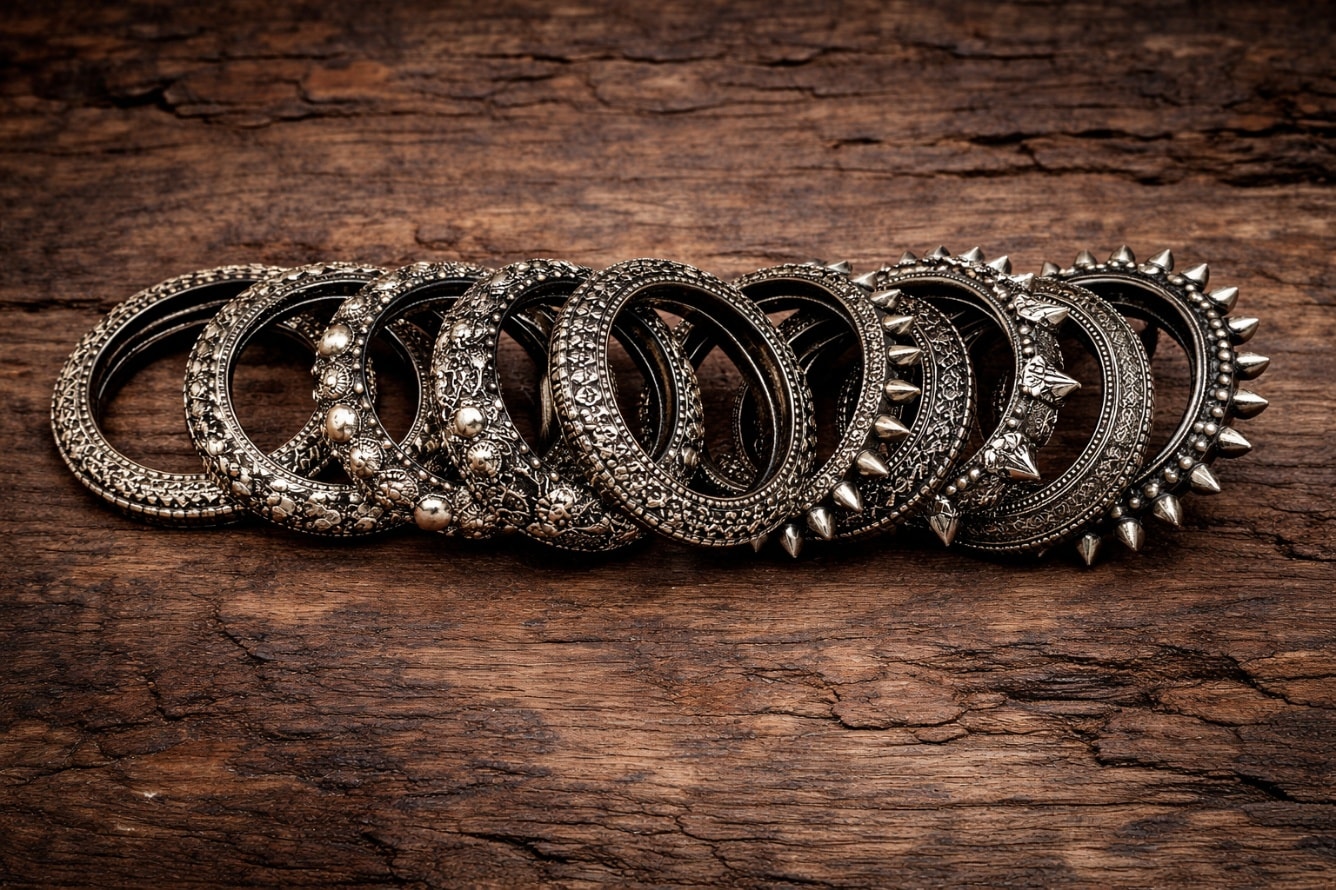
How Oxidised Jewellery Is Born
Oxidation is not damage. It is a chemical conversation in which metal transforms deliberately and artfully. Where others see tarnish, there is design.
Step 1: Meeting the Shadow
Oxidation is not decay; it is intention. A controlled tarnish is introduced to the metal's surface, altering it at its core.
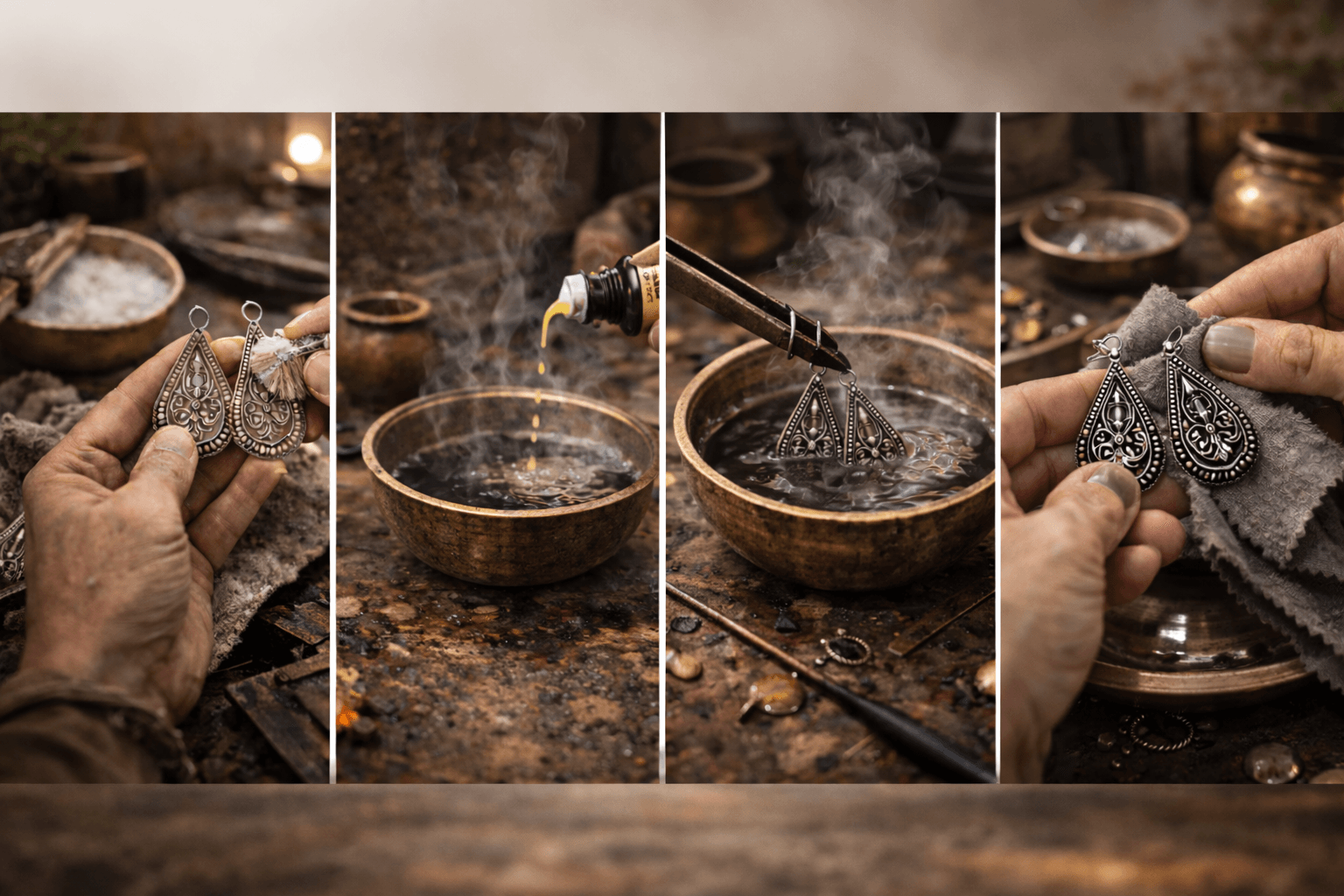
Step 2: Brewing the Transformation
Every transformation needs a catalyst. A solution is prepared, often using liver of sulphur, potassium sulphide, or tellurium dioxide with diluted hydrochloric acid. When silver meets sulphur, something remarkable happens.
The metal does not simply turn black. It travels from charcoal to smoke grey, to deeper tones of quiet intensity.
Step 3: Pathways to Darkness
There is more than one way to invite shadow.
- Jewellery rests inside a pressurized chamber containing traces of sulphur compounds. No immersion. No brushing. Only exposure — patient and precise.
- The oxidising solution is applied exactly where the artisan desires darkness, allowing intention to guide every contour.
- The piece is submerged in a polysulphide solution, darkening evenly as the reaction unfolds.
Step 4: Knowing When to Stop
Oxidation is not about how dark a piece becomes — it is about when to pause.
Typically, the jewellery rests in solution for one to two minutes. The surface deepens. The colour settles. The metal shifts from brightness to quiet strength.
It is removed. Gently scrubbed. Carefully evaluated. If deeper charcoal or true black is desired, the process repeats — layer upon layer of controlled darkness.
When the perfect shade is achieved, the piece is placed in cold water. The reaction halts. The shadow is sealed in place.
Where It All Began
Oxidised jewellery in India carries a story older than written history, stretching back 5,000 years to the Indus Valley civilizations of Harappa and Mohenjo-daro. Over time, this art was preserved and nurtured by tribal communities, who became its true stewards.
Across Rajasthan, Gujarat, Uttar Pradesh, Madhya Pradesh, Maharashtra, Karnataka, Chhattisgarh, Nagaland, Odisha, and Tamil Nadu, the Banjara, Lambani, Rabari, Gond, Bhil, Santhal, Toda tribes
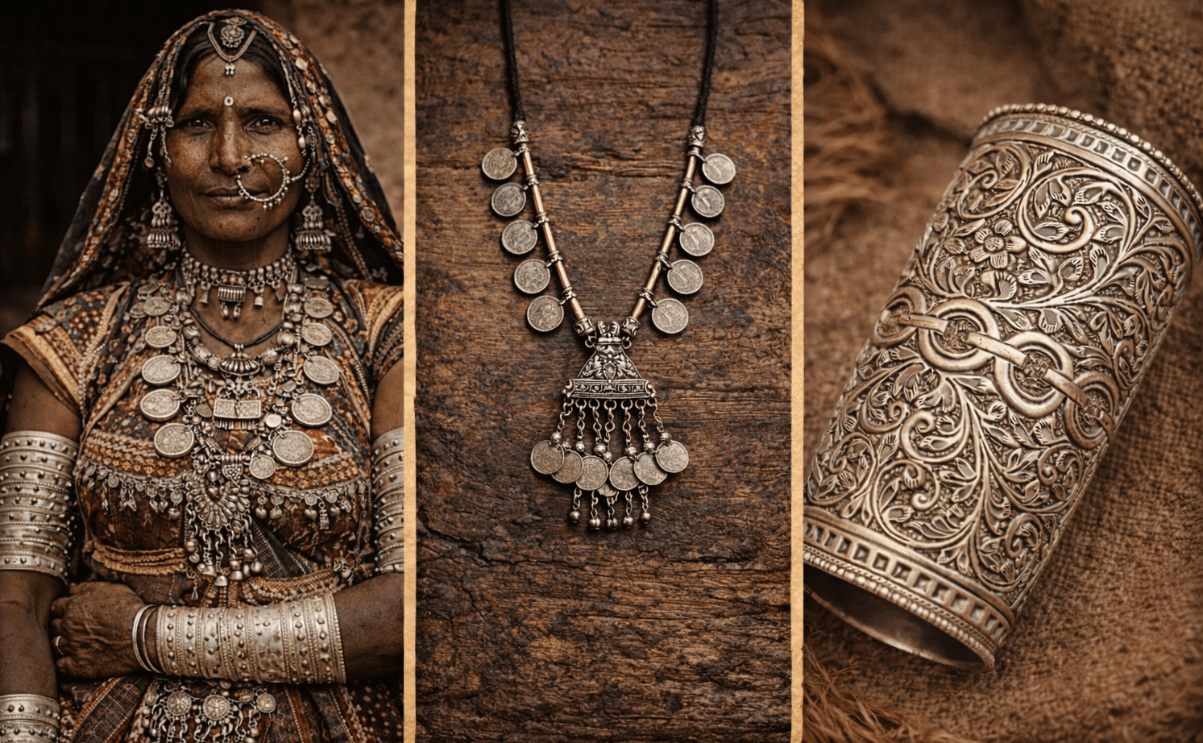
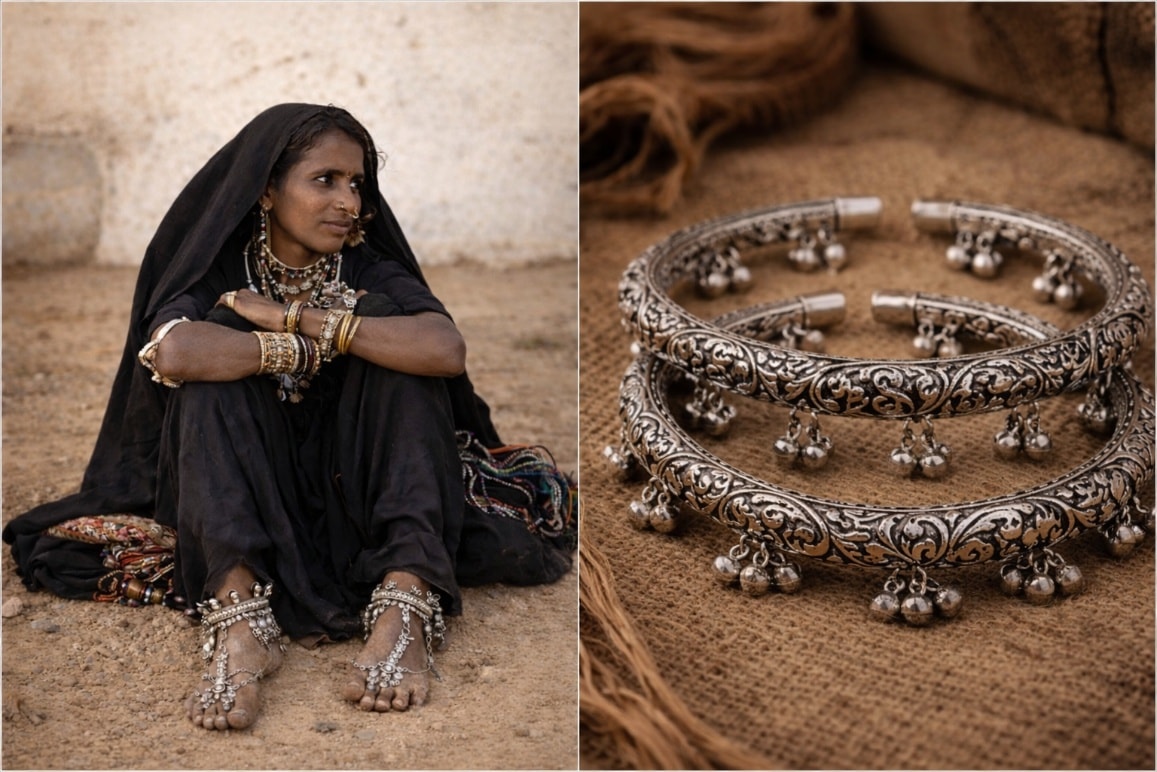
and, up north, the Gujjar and Bakarwal of Jammu & Kashmir, embraced oxidised jewellery not merely as body adornment, but as a reflection of their cultural and social identity, an echo of nomadic freedom and ancestral pride.
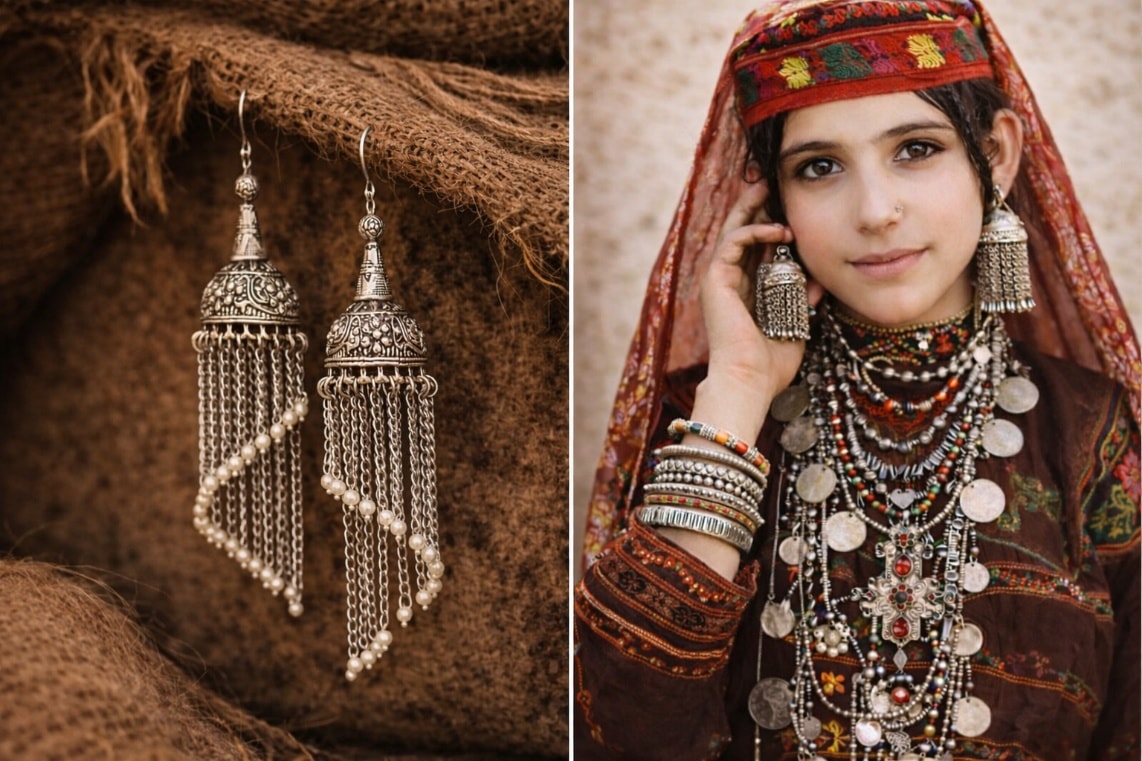
Through this deep connection, each tribe developed its own distinct styles of necklaces, jhumkas, bangles, and anklets, marked by dark patinas and symbolic motifs inspired by regional art, folklore, and nature.
Evolution Over Time
Over time, what began in tribal settlements travelled beyond forests and deserts, finding its place in royal courts. As dynasties rose, oxidised jewellery evolved. Mughal finesse introduced intricate detailing and delicate craftsmanship, while Rajput artistry brought bold forms and regal grandeur. The rustic strength of tribal silver met the sophistication of royal design, and something timeless emerged.
Today, it thrives in a new avatar. Temple-inspired classics sit alongside bold, boho-chic statements. What was once a symbol of tribal life has become versatile art — gracing modern wardrobes, Indo-fusion ensembles, and ethnic couture alike, yet each oxidised piece remains a bridge between shadow and shine, tradition and reinvention.